Coded Message: The Futuristic Font for Building a Modern Brand
Last week, I was redesigning the packaging labels for my candle line. Holding up the old label next to the new candle jar, I felt that familiar pang—the design just didn’t feel cohesive anymore. The logo was fine, the colors were good, but the typeface on the label felt generic, like it could belong to any product on the shelf. I knew the solution wasn’t a massive overhaul, but something subtle and powerful: a new font. That’s when I started testing Coded Message.
What Makes Coded Message Special?
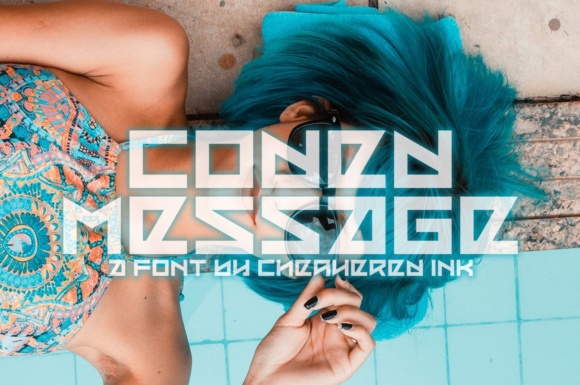
Simply put, Coded Message is a display font with a distinct abstract, techno personality. When you look at it, it doesn’t scream “futuristic” in a chaotic, sci-fi way. Instead, it feels sleek, slightly mysterious, and incredibly modern. The characters have a constructed, geometric quality, but with softened edges and unique details that give it warmth. This balance is its magic—it’s advanced enough to feel fresh and premium, but not so cold that it alienates customers. It’s the visual equivalent of a boutique that uses clean, smart technology but still offers a warm, personal welcome.
In mood, it leans towards sophisticated innovation. I’d describe its overall appeal as confident and forward-thinking. It’s not a font for a whimsical children’s brand or a rustic farmhouse aesthetic. It’s perfect for businesses that want to communicate quality, precision, and a touch of the contemporary—think a modern bakery with avant-garde pastries, a skincare brand focused on clean science, a minimalist café, a tech-forward coaching service, or a designer making sleek, handmade goods.
Putting Coded Message to Work on Real Materials
I applied it first to my candle label, replacing the product name text. The change was immediate. The label suddenly looked curated and intentional. That “generic shelf” feeling vanished. From there, I experimented. On a thank-you card for online orders, using Coded Message for the header “Thank You” made the card feel less like a mass-produced insert and more like a deliberate, branded touch. For my Instagram story templates announcing a new scent, the font made the text pop against the visuals without overpowering them.
This is where its role as a display font shines. It’s exceptional for headlines, short phrases, logos, and packaging titles—anywhere you need a strong visual anchor. I wouldn’t use it for long paragraphs of body text (like the full description on my website). Its strength is in making key elements memorable. For a café, it would be perfect for the menu header or featured drink names. For a beauty brand, it could beautifully highlight the product name on the bottle label. For an online shop, it’s ideal for banner headlines announcing a sale or a new collection.
Readability and Practical Application Tips
Because it’s a decorative typeface, readability depends on context and size. On my candle label, printed at a reasonable size, it was perfectly clear. On a mobile screen, like a social media thumbnail, I made sure to use it at a large enough scale so the unique character shapes weren’t lost. For very small text—like a disclaimer line or a tiny price tag—I paired it with a simpler sans-serif font. This is a crucial tip: use Coded Message for your key brand message, and support it with a clean, readable font for all other information.
That leads perfectly to font pairing. This font pairs wonderfully with a straightforward, modern sans-serif (like a clean geometric sans) for body text. That combination screams “contemporary brand.” For a softer contrast, try it with an elegant, light serif font. If your brand has an artistic edge, pairing it with a subtle handwritten script for accents can create a beautiful, human-meets-tech dynamic. The goal is to let Coded Message be the star of your headlines while ensuring all your text remains easy to digest.
The Professional Polish a Font Can Provide
We often underestimate typography. The font you choose is a direct signal to customers. A consistent, well-chosen typeface builds trust—it shows you’ve paid attention to the details. It makes your brand recognizable across your packaging, your website banner, your business card, and your social posts. When a customer sees the same distinctive font on your product box and your Instagram ad, it creates a seamless experience. They begin to recognize you, not just your product.
Coded Message helped me solve my cohesion problem. It provided that visual consistency. My candle jar, my website graphics, and my promotional flyer now share a common typographic thread. That consistency makes my small business look more polished and planned. It elevates the perception from a hobbyist making candles to a legitimate brand with a defined identity. For any business owner, that leap in perception is invaluable.
Essential Considerations Before Using a New Font
Before committing to any font for your branding, especially a display font like this, do a little due diligence. First, check the licensing. You need a commercial license if you’re using it on products, packaging, or in client work you sell. Second, look at the file formats included. You’ll likely need it in formats compatible with your design software (like .OTF or .TTF) and possibly web formats if you plan to use it on your site.
Explore if the font family includes different weights (like light, regular, bold) or stylistic alternates. These variations give you flexibility—using a bold weight for a logo and a light weight for a subtle tagline. Also, consider its multilingual support if your customer base is global. Finally, test it everywhere! Create mockups of your product label, your menu, your business card. See how it looks printed small, on a screen, and in your logo. A font is a foundational design asset; make sure it’s sturdy enough to build your whole brand identity upon.
For me, Coded Message passed every test. It brought that futuristic, abstract feel I wanted—a hint of innovation to match my products—while keeping everything approachable and professional. It turned my packaging refresh from a simple update into a genuine brand upgrade. And sometimes, that’s exactly what a growing business needs: not a loud shout, but a clear, coded message.